Even-looking skin, treated at the source
Pigmentation and melasma are common concerns that can leave skin tone uneven, with dark patches and discolouration that don't fade on their own. They can stem from a mix of causes - sun exposure, hormonal changes, inflammation, medications, and your skin's own characteristics - which is why a generic approach rarely works. At Dr Hair, treatment is tailored to the type and cause of your pigmentation, your skin type, severity, how long it's been present, and your personal goals.
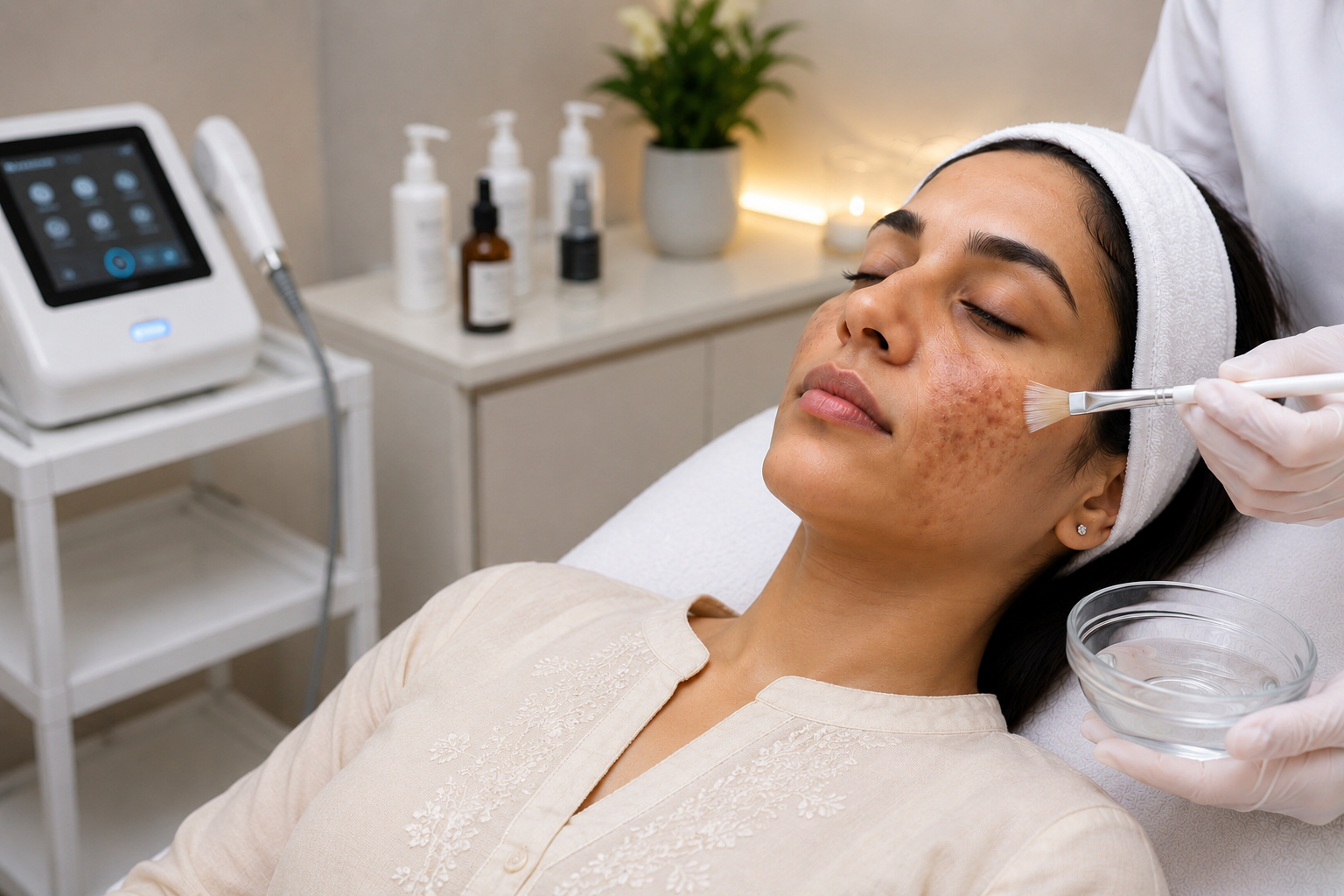
Pigmentation refers to changes in the amount or distribution of melanin in the skin, leaving certain areas darker or uneven compared with the skin around them. Common concerns include:
Melasma is a common pigmentation disorder that typically shows up as brown or grey-brown patches, most often on the face - commonly the:
Melasma can be influenced by sun and visible-light exposure, hormonal factors, heat, and individual susceptibility. It can also return even after significant improvement, which is why long-term maintenance matters as much as the initial treatment.
Pigmentation treatment may help with:
A structured, doctor-led process helps you understand each stage of care.
Your dermatologist assesses the distribution, depth, duration, and type of your pigmentation, alongside your skin type, medical history, medications, previous treatments, and possible triggers.
Different pigmentation conditions can look alike but need different treatment approaches, so accurate assessment comes first.
Your plan may include prescription topicals, medical skincare, chemical peels, oral medication where appropriate, or a combination of these.
Treatment is adjusted as your skin responds - the goal is to improve existing pigmentation and reduce what's driving it.
Because pigmentation, and melasma in particular, can recur, follow-up helps track your progress and adjust treatment or maintenance therapy as needed.
Treatment is chosen for the specific type of pigmentation you have, not applied the same way to everyone.
Often needs long-term management and careful control of environmental triggers.
Needs both the underlying cause and the pigmentation addressed.
Often responds best to targeted treatment paired with consistent photoprotection.
Selected chemical peels can be part of a pigmentation treatment plan, helping improve uneven skin tone and surface pigmentation. The type, concentration, and frequency are matched to your skin condition, skin type, and needs.
Pigmentation management may be complemented by medical skincare, selected chemical peels, professional microneedling, or other clinically appropriate options. Glutathione therapy may also be discussed separately where appropriate, with realistic expectations.
Our approach includes:
Photoprotection is a core part of pigmentation management, especially for melasma. Your plan may include guidance on:
Your dermatologist will recommend the most appropriate treatment based on the type of pigmentation, your skin type, medical history, previous treatments, and goals.
Recovery varies by treatment. Some options can cause temporary redness, sensitivity, dryness, peeling, or mild irritation. Your dermatologist will give you specific aftercare instructions and guidance on skincare and sun protection during recovery.
Improvement is generally gradual, and multiple sessions may be needed to get the results you're after.
Following your dermatologist's guidance and understanding the treatment process are important parts of your care.
Targeted pigmentation care • Personalised treatment • Evidence-based dermatology • Long-term skin management