Precise, professionally assessed treatment for bothersome skin lesions
Advanced Skin Lesion Removal at Dr Hair provides professional assessment and removal of selected benign skin lesions and superficial growths - whether they're cosmetically bothersome, frequently irritated, or need attention for other clinical reasons. Common examples include skin tags, selected warts, benign growths, and other suitable superficial lesions. At Dr Hair, every lesion is assessed before removal. The technique we use is chosen based on the lesion's type, size, location, appearance, and clinical characteristics - never assumed in advance.
Skin lesions are areas of skin that look or feel different from the skin around them. Many are entirely harmless, but that doesn't mean every lesion should simply be removed without a proper look first.
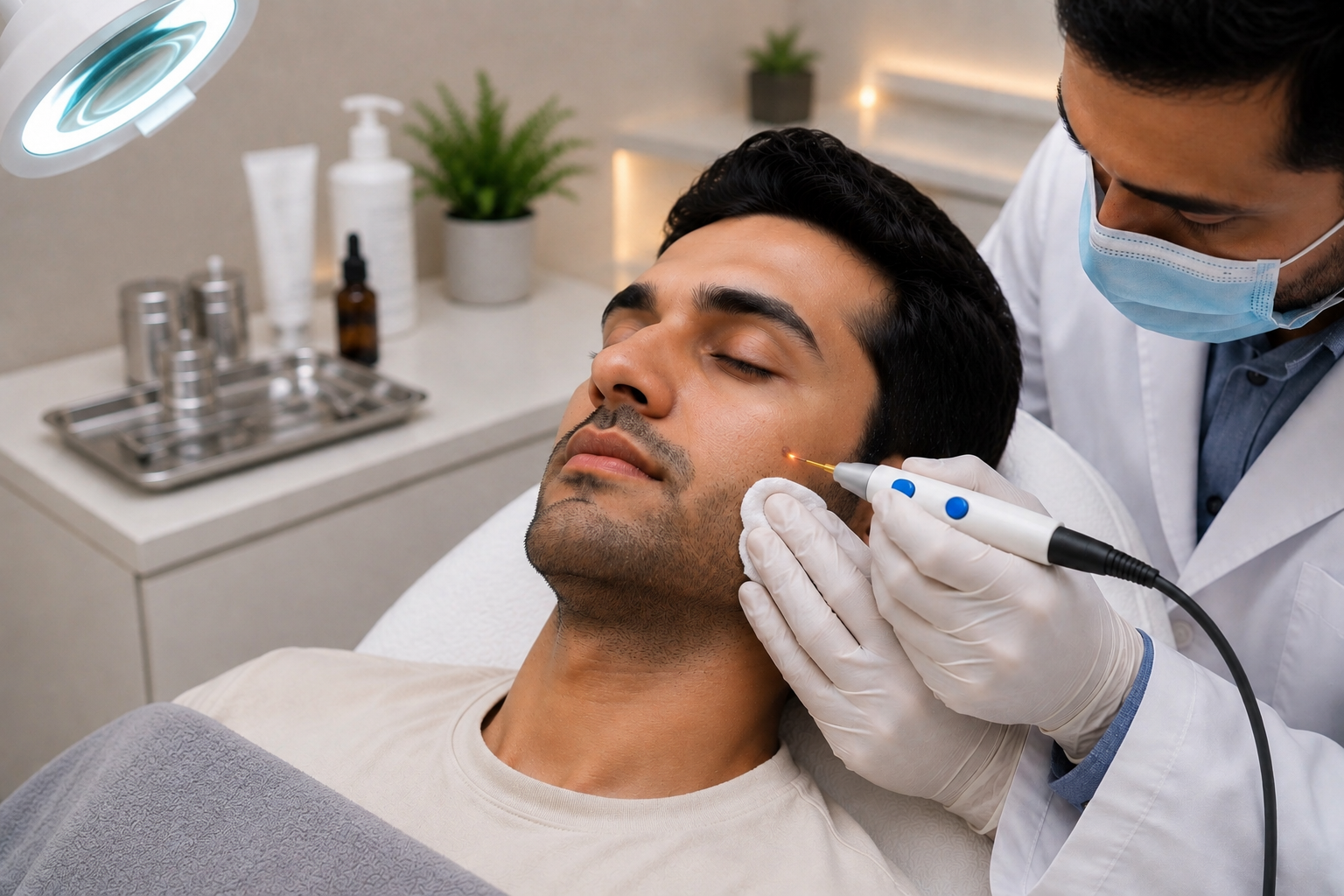
Depending on the lesion, treatment may involve cautery or another appropriate minor dermatological procedure. The priority throughout is effective removal, balanced with good healing, cosmetic appearance, and your comfort.
Lesions that may be suitable for removal include:
Not every mole, pigmented lesion, or skin growth is suitable for immediate removal. Lesions with suspicious or changing features may need further evaluation before any procedure.
A structured, doctor-led process helps you understand each stage of care.
Your dermatologist examines the lesion and assesses its appearance, size, location, duration, symptoms, and relevant medical history.
Once assessed, the most appropriate treatment option is chosen. Some lesions may need additional evaluation before removal.
Where appropriate, the lesion is treated using a suitable technique, such as cautery or another minor procedure - selected for that specific lesion.
You'll receive clear instructions on wound care, skincare, sun protection, and activity during healing.
Follow-up may be recommended depending on the lesion, treatment performed, and how your skin responds.
Cautery is a commonly used minor dermatological procedure for selected superficial skin lesions. It uses controlled energy to treat the targeted tissue, and may be considered for conditions such as skin tags and certain superficial benign lesions.
As with every procedure at Dr Hair, cautery is performed only after proper clinical assessment, with technique and intensity matched to the lesion and treatment area.
Our approach includes:
A consultation is essential before treatment, to confirm the lesion is genuinely suitable for removal.
Depending on the procedure and lesion, you may notice temporary redness, tenderness, crusting, mild swelling, or a small treated area while healing.
Healing time varies based on the size and location of the lesion, the treatment method used, and your individual skin response.
Following your aftercare instructions and protecting the treated area from unnecessary sun exposure supports proper healing and helps minimise post-inflammatory pigmentation.
Following your dermatologist's guidance and understanding the treatment process are important parts of your care.
Professional assessment • Precise treatment • Individualised care • Appropriate follow-up